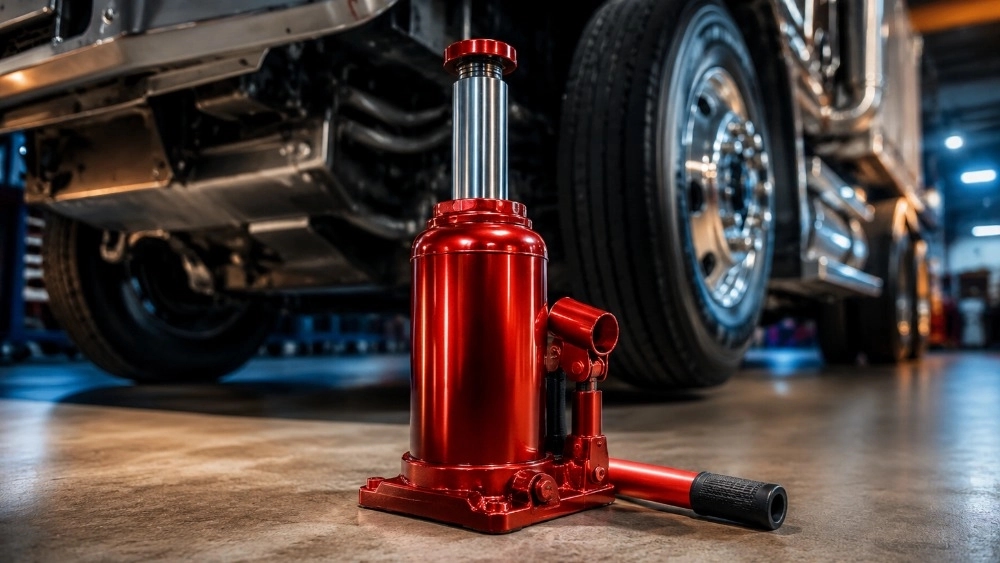
Hydraulic jack operation mechanism for heavy vehicles
Types of hydraulic jacks for heavy vehicles
1. Bottle-shaped (cylindrical) hydraulic jacks
2. Susmari hydraulic jacks (workshop)
3. Air-telescopic hydraulic jacks
The importance of using a standard hydraulic jack in heavy vehicles
- Safety of the operator and repairman: Breaking or suddenly emptying the oil in low-quality jacks can lead to the car falling and serious injuries.
- Preventing damage to the car chassis: Standard jacks prevent the chassis or heavy car body from deforming with proper pressure distribution and having safe support points.
- Increasing the speed of operation in Road: Vehicle breakdowns on highways and transit roads have many side risks. A smooth and efficient hydraulic jack doubles the speed of changing tires or temporary repairs.
Key factors in choosing a hydraulic jack for heavy vehicles
Loading capacity (tonnage)
Height range (minimum and maximum height)
The quality of the body and construction materials
The quality of packings and bowls of hydraulic felts
Vital tips to maintain and extend the life of hydraulic jacks
- Hydraulic oil periodic inspection and replacement: The oil in the jack loses its quality over time or becomes contaminated with dust. It is necessary to use special hydraulic oil with appropriate viscosity.
- Airing the system: Air entering the hydraulic circuit prevents the jack from going up completely or causing it to move step by step. Regular ventilation of the system helps to improve its performance.
- Keeping the shaft (piston) clean: After finishing the work, always collect the jack piston completely so that it is not exposed to impact, moisture and dust and does not get rusted.
Safety principles when working with hydraulic jacks for heavy vehicles
- Using protective jacks: A hydraulic jack is a tool for lifting a car, not for holding it long-term. After raising the car, be sure to use safety jacks suitable for the weight of the car.
- Level and firm support surface: Always place the jack on a flat, level and firm ground. It is very dangerous to place the jack on sandy, muddy or sloping ground.
- Wheel locking: Before jacking, block the opposite wheels completely using special gears (under the wheel) to prevent the possible movement of the vehicle.
New Jack; The epitome of quality and durability in heavy hydraulic equipment